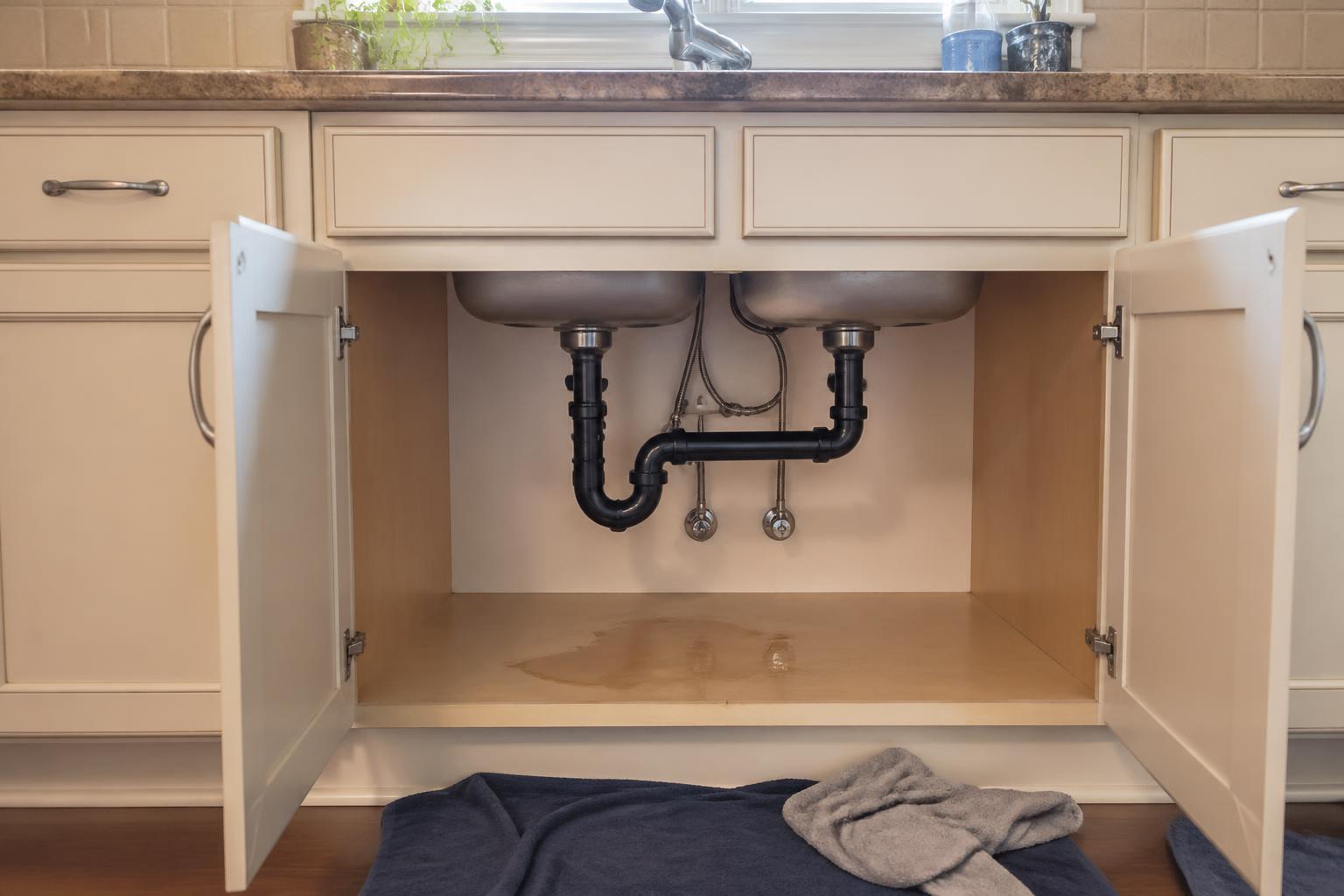
Finding water under a sink is stressful, especially when you are not sure how long it has been there. The first goal is to stop more water from collecting, protect the cabinet and floor, and gather a few clues about where the leak may be coming from.
1. Move items out of the cabinet
Start by removing cleaning supplies, trash bags, storage bins, and anything else under the sink. This gives you room to see the plumbing and keeps your belongings from sitting in water.
If any chemicals or cleaners were stored in the wet area, handle them carefully and avoid mixing products while you clean up.
2. Dry the area and look for active dripping
Use towels to soak up standing water, then place a dry towel or paper towel under the pipes. Watch for fresh drips. This can help you tell whether the leak is still active or whether the water came from a one-time spill.
Do not ignore water that keeps returning after you dry the cabinet. Even a slow drip can damage cabinet panels, flooring, drywall, and nearby trim over time.
3. Turn off the fixture shutoff valves if water is still leaking
Most sinks have small shutoff valves on the hot and cold supply lines under the cabinet. If you see water spraying, dripping from a supply line, or coming from the faucet connections, turn these valves clockwise until they stop.
If a valve is stuck, corroded, or starts leaking when you touch it, stop and call a plumber. Forcing an older valve can make the problem worse.
4. Avoid using the sink until you know the source
If the water appears around the drainpipe, P-trap, garbage disposal, or basket strainer, avoid running water into the sink. Drain leaks may only show up when the sink is used, which can make the cabinet look dry between uses.
If the leak is under a bathroom sink, also check whether water is running down from the countertop, faucet base, or backsplash area. Sometimes the plumbing is fine and the water is coming from splashing or a failed seal above the cabinet.
5. Check common leak points
Look closely at the supply lines, shutoff valves, faucet connections, drain connections, P-trap, disposal connection, and the area where the sink meets the countertop. A flashlight can help you see small beads of water forming on fittings.
Signs such as swollen cabinet material, musty odors, dark staining, or soft flooring can mean the leak has been happening longer than it first appeared.
6. Do not rely on tape or temporary patches for pressurized lines
A temporary wrap may slow a small drip for a short time, but it is not a reliable repair for a supply line or shutoff valve. Pressurized water can keep leaking behind the patch, and a weak connection can fail suddenly.
If the source is a loose drain slip nut, tightening may help, but be careful not to overtighten plastic parts. Cracked fittings, old washers, corroded valves, and damaged supply lines usually need replacement.
7. Protect the cabinet while waiting for repair
After you stop the water, keep the cabinet open so air can circulate. Use a fan if it is safe to do so and the area is not actively wet near electrical outlets or appliances. Replace soaked items and keep checking for new moisture.
If the cabinet base stays damp, the leak continues, or you notice mold-like growth, it is time to have the area inspected.
When to call a plumber
Call a plumber if you cannot identify the source, the shutoff valve will not close, water returns after drying, the leak involves a supply line, or you see damage to the cabinet or floor. Agent CSS Rename Smoke Plumbing helps homeowners in Boulder, Longmont, Lafayette, and nearby communities diagnose under-sink leaks and choose a practical next step.
If you find water under a sink and want help before the damage spreads, contact Agent CSS Rename Smoke Plumbing to request service.